
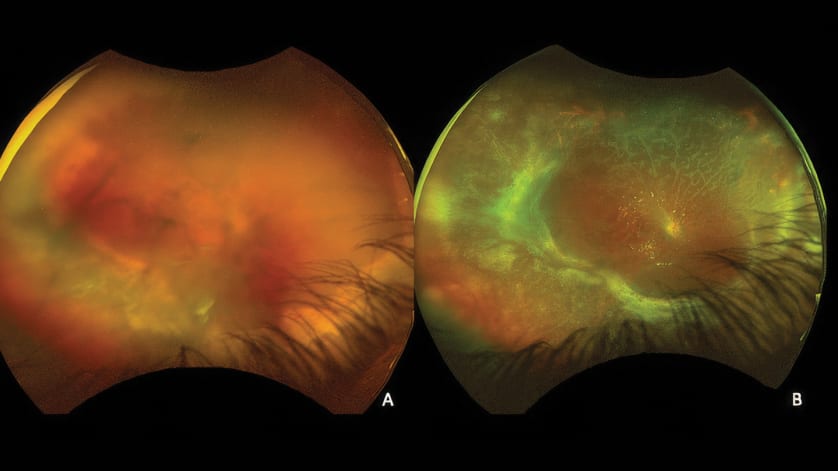
Ophthalmologists caring for adults with this condition may encounter persistent inflammation, treatment dependence, and the cumulative ocular effects of childhood disease.
Multiple corticosteroid approaches are available for the management of noninfectious uveitis, including injectable triamcinolone, sustained-release dexamethasone implants, and fluocinolone implants. The optimal choice depends on disease location, desired duration of effect, treatment burden, lens status, and tolerance for potential adverse effects such as cataract progression and elevated intraocular pressure (IOP).
At ASRS 2026, Kareem Moussa, MD, presented early data suggesting optoretinography may identify photoreceptor dysfunction in diabetic eyes before conventional imaging reveals abnormalities.