

A 77-year-old male patient presented for a new comprehensive patient examination. Clinical and radiographic examinations revealed failing amalgam restorations with recurrent caries and multiple cusp fractures involving the maxillary left first and second molars (teeth Nos. 14 and 15). After diagnosis, the patient elected treatment with indirect monolithic zirconia crowns. Treatment commenced with the removal of existing restorations, recurrent decay, and unsupported tooth structure. Core buildups were completed using a bioactive restorative material. Tooth preparations were finalized conservatively, maintaining adequate reduction for zirconia restorations. To capture the distal margin of tooth No. 15, retraction paste was used without the placement of a retraction cord, leveraging the enhanced depth of field and image accuracy of the intraoral scanner. Digital impressions were acquired with the iTero Lumina™ scanner (Align Technology, Inc., itero.com). Restorations were designed using iTero™ Design Suite (Align Technology), a software incorporating artificial intelligence (AI)–assisted restorative workflows. After minor design adjustments, monolithic zirconia restorations were milled in-office from a multilayered zirconia block using a CEREC Primemill (Dentsply Sirona) milling unit, sintered, and polished. Before cementation, the intaglio surfaces were air-abraded with aluminum oxide, then cemented using an MDP-containing primer and resin cement. The final clinical and radiographic evaluation confirmed excellent marginal adaptation, occlusal integration, and esthetic functional rehabilitation.
KEY TAKEAWAYS
- Integrated intraoral scanning and design workflows facilitate effective margin capture and visualization in clinically challenging subgingival preparation zones.
- AI-enhanced restoration design can reduce reliance on manual adjustments while supporting restorative outcomes, utilizing machine learning, computer vision, and large datasets of successful restorations to automate many steps that traditionally have depended on technician skill.
- Connected digital workflows consolidate scan-to-design-to-production steps, enabling same-appointment restoration delivery in appropriate clinical scenarios.
Figures and Images

Figure 1

Figure 2

Figure 3

Figure 4

Figure 5

Figure 6

Figure 7

Figure 8

Figure 9

Figure 10

Figure 11
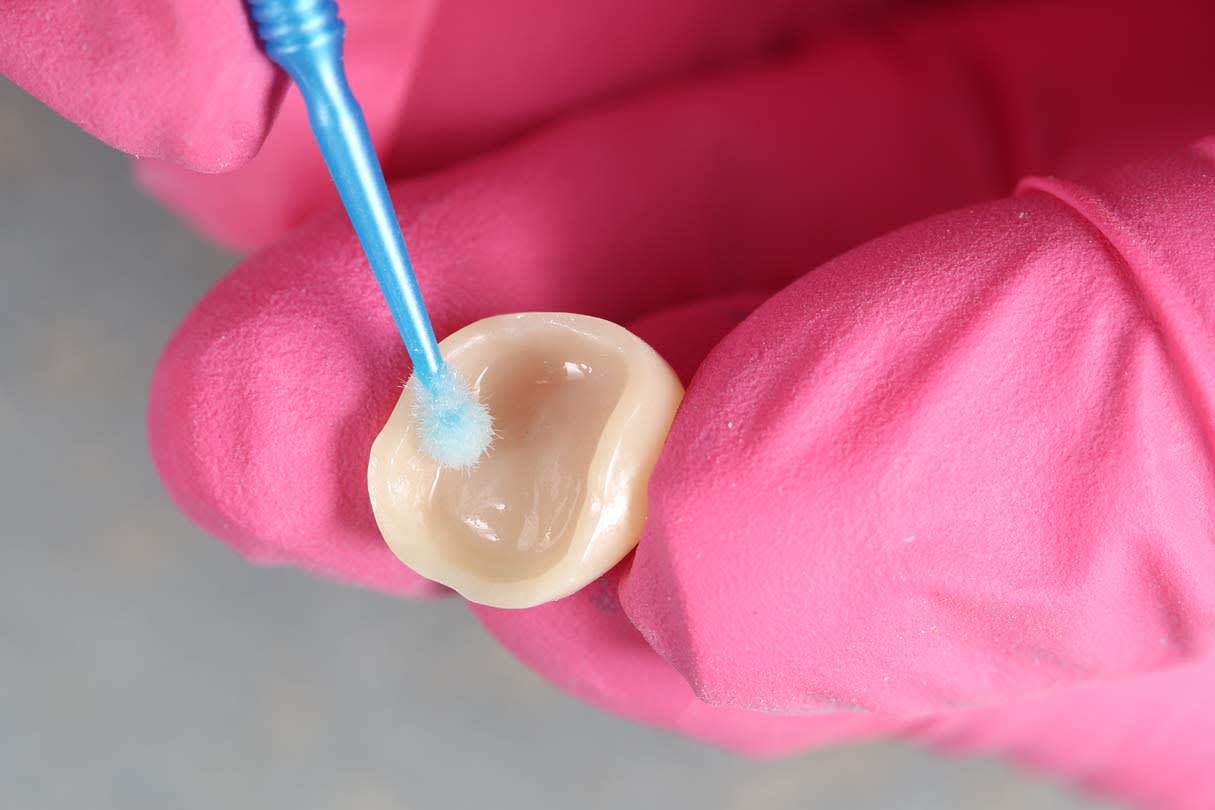
Figure 12

Figure 13

Figure 14

J.L. Holliday, DMD